

You earned money this month. You paid rent, bought groceries, maybe went out a couple of times — and now you’re wondering where the rest went. Sound familiar?
A budget can help with that. It doesn’t mean giving up everything you enjoy. It simply means knowing where your money goes and making sure it supports your priorities.
If you’re wondering how to start budgeting, you only need three things: your income, your expenses, and a realistic spending plan.
Here’s how to build your first budget in five simple steps.
Step 1: How to Start Budgeting With Your Monthly Income
budget starts with how much money you actually bring home.
Use your take-home pay — the amount deposited into your bank account after taxes and paycheck deductions.
If you’re paid every two weeks, multiply your take-home pay per paycheck by 26 and divide by 12 to estimate your average monthly income.
For example, a $1,500 biweekly paycheck equals an average of $3,250 per month. Most months, however, you’ll receive only two paychecks, so plan your regular bills around the money arriving that month.
If you’re a freelancer or gig worker, review several months of income and consider using a conservative estimate.
Include reliable income from your job, side work, or other regular sources. Avoid counting bonuses or tax refunds you haven’t received.
Step 2: List All Your Monthly Expenses
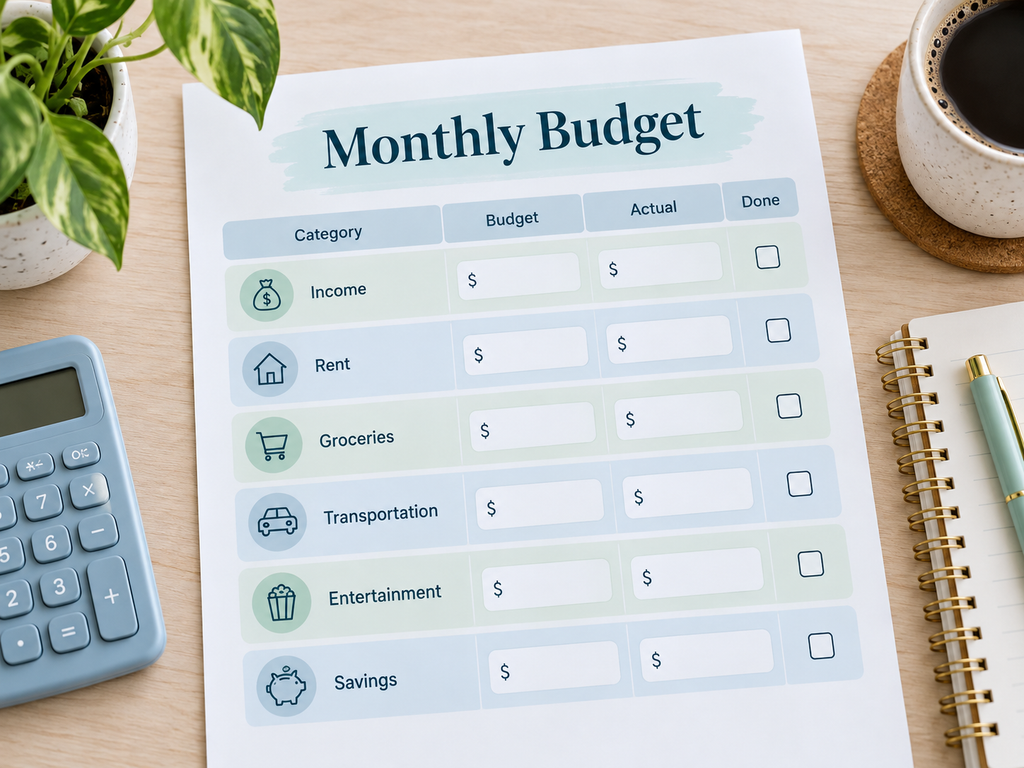
Review your bank and credit card statements from the past two or three months.
Separate your spending into two categories.
Fixed expenses are costs that usually stay consistent:
- Rent or mortgage
- Car payments
- Insurance premiums
- Subscriptions
- Minimum loan payments
Variable expenses change from month to month:
- Groceries
- Gas and transportation
- Dining out
- Entertainment
- Clothing and personal care
Don’t forget occasional bills, such as car registration, annual subscriptions, or holiday gifts.
For example, if you pay $240 for an annual subscription, setting aside $20 each month helps you prepare.
Look at larger expenses, too. Housing, transportation, and debt payments may have a bigger impact on your budget than occasional small purchases.
Step 3: Try the 50/30/20 Budget Rule
Not sure how to divide your income?
The 50/30/20 rule is a popular starting point for beginners. It divides your take-home income into needs, wants, and savings.
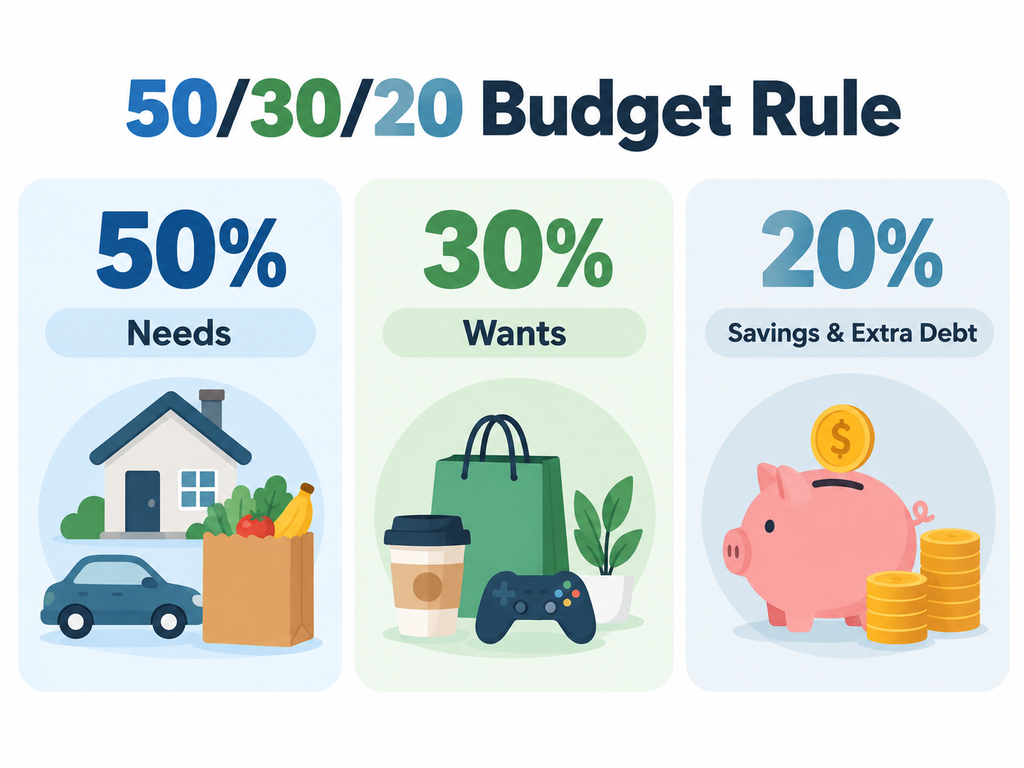
| Category | Percentage | $4,000 Monthly Income |
|---|---|---|
| Needs | 50% | $2,000 |
| Wants | 30% | $1,200 |
| Savings & Extra Debt Payments | 20% | $800 |
Needs (50%)
Essential expenses such as housing, utilities, groceries, insurance, necessary transportation, and minimum required debt payments.
Wants (30%)
Dining out, streaming subscriptions, hobbies, entertainment, and nonessential shopping.
Savings and Extra Debt Payments (20%)
Emergency savings, retirement contributions, and debt payments above your required minimums.
Remember, these percentages aren’t strict requirements.
If you live in an expensive area, your needs might take up 60% of your income. That’s a reason to adjust your plan, not abandon budgeting.
The goal is to create a realistic framework that works for your situation.
Step 4: Choose a Budgeting Method
There’s no single budgeting method that works for everyone.
Here are four beginner-friendly options.
Zero-Based Budgeting
Give every dollar a job. Your income minus planned expenses and savings should equal zero, with no money left unassigned.
Best for people who prefer detailed financial planning.
Envelope Method
Set a spending limit for each category using physical cash envelopes or digital categories.
When the money assigned to a category runs out, stop spending or adjust your budget.
Best for controlling discretionary spending.
Pay-Yourself-First
Set aside an affordable amount for savings on payday while making sure essential expenses are covered.
Best for people who want to prioritize savings without tracking every purchase.
50/30/20 Method
Divide your income into three broad categories instead of managing dozens of individual limits.
Best for beginners who prefer a simple structure.
Choose whichever method feels easiest to maintain. You can always change it later.
Step 5: Track Your Spending and Adjust
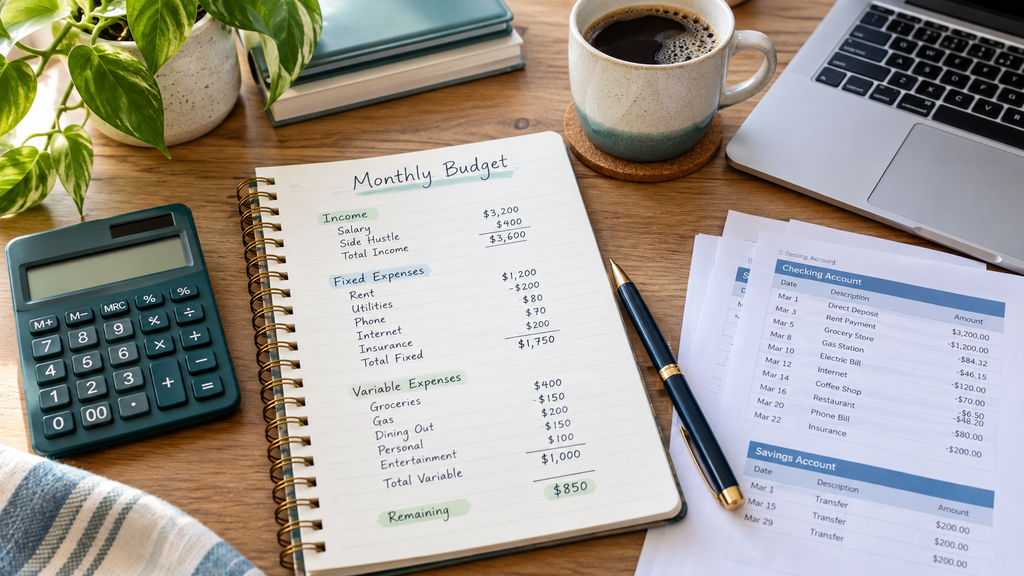
Creating a budget is only the beginning. Regular check-ins help you stay on track.
Set aside about 10 minutes each week to review your spending.
You can use:
- Google Sheets or Excel
- Budgeting apps such as YNAB or EveryDollar
- A notebook and pen
You don’t need a paid app to manage your money effectively.
At the end of each month, compare your planned expenses with what you actually spent.
For example, if groceries cost $50 more than expected but dining out cost $50 less, you might adjust those categories next month.
Common Budgeting Mistakes to Avoid
Making your budget too strict: Leave room for enjoyable spending when your finances allow.
Forgetting irregular expenses: Plan ahead for annual bills and predictable costs.
Ignoring spending patterns: Use your actual expenses instead of unrealistic estimates.
Giving up after one bad month: Review what happened, adjust your plan, and keep going.
Your first budget won’t be perfect. What matters is making steady improvements.
Frequently Asked Questions
How much money do I need to start budgeting?
You don’t need a minimum income. Start by recording what you earn and identifying essential expenses. Budgeting can help you understand your financial situation even when money is tight.
Is the 50/30/20 rule good for beginners?
Yes. It’s a simple starting framework, but the percentages may need adjusting depending on your income, housing costs, and financial obligations.
Do I need a budgeting app?
No. A spreadsheet or notebook works just fine. Choose a tracking method you’ll use consistently.
Bottom Line
Budgeting isn’t about restricting every purchase. It’s about understanding your income, planning your expenses, and making room for what matters.
Start simple: calculate your take-home pay, list your expenses, choose a budgeting method, and review your spending regularly.
The best budget isn’t the most complicated one. It’s the one you can realistically stick to.
Your first step today: Open your latest bank statement and write down your monthly income and essential expenses.